

实例介绍
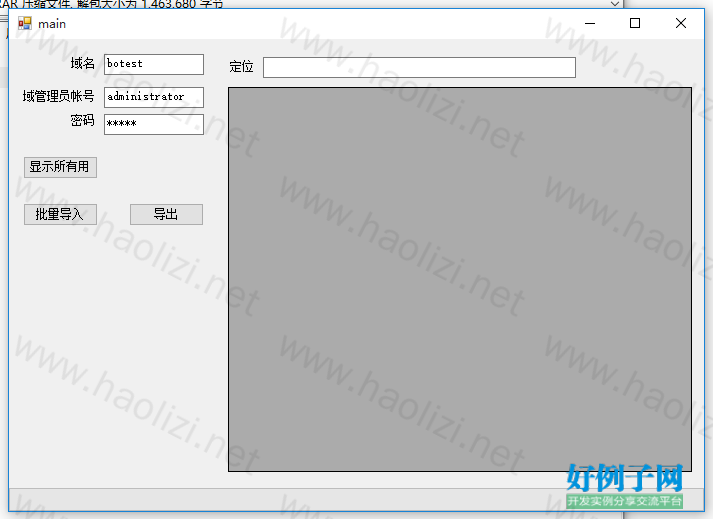
【实例简介】批量添加删除域账号
【实例截图】
【核心代码】
using System;
using System.DirectoryServices;
using System.Runtime.InteropServices;
using System.Security.Principal;
using System.Data;
using System.Diagnostics;
using System.Windows.Forms;
using System.Threading;

///
/// 活动目录辅助类。封装一系列活动目录操作相关的方法。
///
public class ADHelper
{
    ///
    /// 用户登录验证结果
    ///
    public enum LoginResult
    {
        ///
        /// 正常登录
        ///
        LOGIN_USER_OK = 0,
        ///
        /// 用户不存在
        ///
        LOGIN_USER_DOESNT_EXIST,
        ///
        /// 用户帐号被禁用
        ///
        LOGIN_USER_ACCOUNT_INACTIVE,
        ///
        /// 用户密码不正确
        ///
        LOGIN_USER_PASSWORD_INCORRECT
    }

    ///
    /// 用户属性定义标志
    ///
    public enum ADS_USER_FLAG_ENUM
    {
        ///
        /// 登录脚本标志。如果通过 ADSI LDAP 进行读或写操作时,该标志失效。如果通过 ADSI WINNT,该标志为只读。
        ///
        ADS_UF_SCRIPT = 0X0001,
        ///
        /// 用户帐号禁用标志
        ///
        ADS_UF_ACCOUNTDISABLE = 0X0002,
        ///
        /// 主文件夹标志
        ///
        ADS_UF_HOMEDIR_REQUIRED = 0X0008,
        ///
        /// 过期标志
        ///
        ADS_UF_LOCKOUT = 0X0010,
        ///
        /// 用户密码不是必须的
        ///
        ADS_UF_PASSWD_NOTREQD = 0X0020,
        ///
        /// 密码不能更改标志
        ///
        ADS_UF_PASSWD_CANT_CHANGE = 0X0040,
        ///
        /// 使用可逆的加密保存密码
        ///
        ADS_UF_ENCRYPTED_TEXT_PASSWORD_ALLOWED = 0X0080,
        ///
        /// 本地帐号标志
        ///
        ADS_UF_TEMP_DUPLICATE_ACCOUNT = 0X0100,
        ///
        /// 普通用户的默认帐号类型
        ///
        ADS_UF_NORMAL_ACCOUNT = 0X0200,
        ///
        /// 跨域的信任帐号标志
        ///
        ADS_UF_INTERDOMAIN_TRUST_ACCOUNT = 0X0800,
        ///
        /// 工作站信任帐号标志
        ///
        ADS_UF_WORKSTATION_TRUST_ACCOUNT = 0x1000,
        ///
        /// 服务器信任帐号标志
        ///
        ADS_UF_SERVER_TRUST_ACCOUNT = 0X2000,
        ///
        /// 密码永不过期标志
        ///
        ADS_UF_DONT_EXPIRE_PASSWD = 0X10000,
        ///
        /// MNS 帐号标志
        ///
        ADS_UF_MNS_LOGON_ACCOUNT = 0X20000,
        ///
        /// 交互式登录必须使用智能卡
        ///
        ADS_UF_SMARTCARD_REQUIRED = 0X40000,
        ///
        /// 当设置该标志时,服务帐号(用户或计算机帐号)将通过 Kerberos 委托信任
        ///
        ADS_UF_TRUSTED_FOR_DELEGATION = 0X80000,
        ///
        /// 当设置该标志时,即使服务帐号是通过 Kerberos 委托信任的,敏感帐号不能被委托
        ///
        ADS_UF_NOT_DELEGATED = 0X100000,
        ///
        /// 此帐号需要 DES 加密类型
        ///
        ADS_UF_USE_DES_KEY_ONLY = 0X200000,
        ///
        /// 不要进行 Kerberos 预身份验证
        ///
        ADS_UF_DONT_REQUIRE_PREAUTH = 0X4000000,
        ///
        /// 用户密码过期标志
        ///
        ADS_UF_PASSWORD_EXPIRED = 0X800000,
        ///
        /// 用户帐号可委托标志
        ///
        ADS_UF_TRUSTED_TO_AUTHENTICATE_FOR_DELEGATION = 0X1000000
    }

    private DirectoryEntry entry;

    public ADHelper(string ADPath, string ADUser, string ADPassword)
    {
        entry = new DirectoryEntry(ADPath, ADUser, ADPassword, AuthenticationTypes.Secure);
    }

    #region GetDirectoryEntry

    ///
    /// 根据用户公共名称和密码取得用户的 对象。
    ///
    /// 用户公共名称
    /// 用户密码
    /// 如果找到该用户,则返回用户的 对象;否则返回 null
    public DirectoryEntry GetDirectoryEntry(string commonName)
    {
        DirectorySearcher deSearch = new DirectorySearcher(entry);
        deSearch.Filter = "(&(&(objectCategory=person)(objectClass=user))(cn="   commonName   "))";
        deSearch.SearchScope = SearchScope.Subtree;

        try
        {
            SearchResult result = deSearch.FindOne();
            entry = new DirectoryEntry(result.Path);
            return entry;
        }
        catch
        {
            return null;
        }
    }

    ///
    /// 根据用户帐号称取得用户的 对象
    ///
    /// 用户帐号名
    /// 如果找到该用户,则返回用户的 对象;否则返回 null
    public DirectoryEntry GetDirectoryEntryByAccount(string sAMAccountName)
    {
        DirectorySearcher deSearch = new DirectorySearcher(entry);
        deSearch.Filter = "(&(&(objectCategory=person)(objectClass=user))(sAMAccountName="   sAMAccountName   "))";
        deSearch.SearchScope = SearchScope.Subtree;

        try
        {
            SearchResult result = deSearch.FindOne();
            entry = new DirectoryEntry(result.Path);
            return entry;
        }
        catch
        {
            return null;
        }
    }

    ///
    /// 根据用户帐号和密码取得用户的 对象
    ///
    /// 用户帐号名
    /// 用户密码
    /// 如果找到该用户,则返回用户的 对象;否则返回 null
    public DirectoryEntry GetDirectoryEntryByAccount(string sAMAccountName, string password)
    {
        if (entry != null)
        {
            string commonName = entry.Properties["cn"][0].ToString();

            if (GetDirectoryEntry(commonName) != null)
                return GetDirectoryEntry(commonName);
            else
                return null;
        }
        else
        {
            return null;
        }
    }

    ///
    /// 根据组名取得用户组的 对象
    ///
    /// 组名
    ///
    public DirectoryEntry GetDirectoryEntryOfGroup(string groupName)
    {
        DirectorySearcher deSearch = new DirectorySearcher(entry);
        deSearch.Filter = "(&(objectClass=group)(cn="   groupName   "))";
        deSearch.SearchScope = SearchScope.Subtree;

        try
        {
            SearchResult result = deSearch.FindOne();
            entry = new DirectoryEntry(result.Path);
            return entry;
        }
        catch
        {
            return null;
        }
    }

    #endregion

    #region GetProperty

    ///
    /// 获得指定 指定属性名对应的值
    ///
    ///
    /// 属性名称
    /// 属性值
    public static string GetProperty(DirectoryEntry de, string propertyName)
    {
        if (de.Properties.Contains(propertyName))
        {
            return de.Properties[propertyName][0].ToString();
        }
        else
        {
            return string.Empty;
        }
    }

    ///
    /// 获得指定搜索结果 中指定属性名对应的值
    ///
    ///
    /// 属性名称
    /// 属性值
    public static string GetProperty(SearchResult searchResult, string propertyName)
    {
        if (searchResult.Properties.Contains(propertyName))
        {
            return searchResult.Properties[propertyName][0].ToString();
        }
        else
        {
            return string.Empty;
        }
    }

    #endregion

    ///
    /// 设置指定 的属性值
    ///
    ///
    /// 属性名称
    /// 属性值
    public static void SetProperty(DirectoryEntry de, string propertyName, string propertyValue)
    {
        if (propertyValue != string.Empty || propertyValue != "" || propertyValue != null)
        {
            if (de.Properties.Contains(propertyName))
            {
                de.Properties[propertyName][0] = propertyValue;
            }
            else
            {
                de.Properties[propertyName].Add(propertyValue);
            }
        }
    }

    ///
    /// 创建新的用户
    ///
    /// DN 位置。例如:OU=共享平台 或 CN=Users
    /// 公共名称
    /// 帐号
    /// 密码
    ///
    public bool ADD(IdentityImpersonation impersonate, string ldapDN, string user, string displayName, string password)
    {
        DirectoryEntry subEntry = entry.Children.Find(ldapDN);
        DirectoryEntry deUser = subEntry.Children.Add("CN="   user, "user");
        deUser.Properties["displayName"].Value = displayName;
        deUser.Properties["samAccountName"].Value = user;
        deUser.CommitChanges();
        SetPassword(impersonate, deUser, password);
        EnableUser(impersonate, deUser);
        return true;
    }

    public bool ADD(IdentityImpersonation impersonate, string ldapDN, DataTable dt, ProgressBar progressBar1)
    {

            progressBar1.Maximum = dt.Rows.Count;
            DirectoryEntry subEntry = entry.Children.Find(ldapDN);
            foreach (DataRow dr in dt.Rows)
            {
                progressBar1.Value  ;
                string user = dr["user"].NullableToString();
                string displayName = dr["displayName"].NullableToString();
                string password = dr["password"].NullableToString();

                DirectoryEntry deUser = subEntry.Children.Add("CN="   user, "user");
                deUser.Properties["displayName"].Value = displayName;
                deUser.Properties["samAccountName"].Value = user;
                deUser.CommitChanges();
                SetPassword(impersonate, deUser, password);
                EnableUser(impersonate, deUser);
            }

        return true;
    }

    public bool ADD(IdentityImpersonation impersonate, DataTable dt,  ProgressBar progressBar1,Form f)
    {
        f.BeginInvoke((ThreadStart)delegate()
        {
            Stopwatch wath = new Stopwatch();
            wath.Start();
            DirectoryEntry subEntry = entry.Children.Find("CN=Users");

            int addcount = 0;
            progressBar1.Maximum = dt.Rows.Count;
            foreach (DataRow dr in dt.Rows)
            {
                progressBar1.Value  ;
                string user = dr["登录名"].NullableToString();
                string displayName = dr["显示名"].NullableToString();
                string password = dr["密码"].NullableToString();
                if (string.IsNullOrEmpty(user))
                    continue;
                if (string.IsNullOrEmpty(password))
                    password = user;
                DirectoryEntry deUser = subEntry.Children.Add("CN="   user, "user");
                deUser.Properties["displayName"].Value = displayName;
                deUser.Properties["samAccountName"].Value = user;
                deUser.CommitChanges();
                SetPassword(impersonate, deUser, password);
                EnableUser(impersonate, deUser);
                addcount  ;
                Application.DoEvents();
            }

            wath.Stop();
            decimal runtime = wath.ElapsedMilliseconds;
            MessageBox.Show("用时"   runtime / 1000   "秒,共导入"   addcount "个");
        });
        return true;
    }

    ///
    /// 创建新的用户。默认创建在 Users 单元下。
    ///
    /// 公共名称
    /// 帐号
    /// 密码
    ///
    public bool ADD(IdentityImpersonation impersonate, string user, string displayName, string password)
    {
        return ADD(impersonate, "CN=Users", user, displayName, password);
    }

    ///
    /// 判断指定公共名称的用户是否存在
    ///
    /// 用户公共名称
    /// 如果存在,返回 true;否则返回 false
    public bool IsUserExists(string commonName)
    {
        DirectorySearcher deSearch = new DirectorySearcher(entry);
        deSearch.Filter = "(&(&(objectCategory=person)(objectClass=user))(cn="   commonName   "))";       // LDAP 查询串
        SearchResultCollection results = deSearch.FindAll();

        if (results.Count == 0)
            return false;
        else
            return true;
    }

    public DataTable SearchAll(string Class)
    {
        DirectorySearcher deSearch = new DirectorySearcher(entry);
        deSearch.Filter = "(&(&(objectCategory=person)(objectClass=user)))";
        SearchResultCollection results = deSearch.FindAll();

        DataTable dt = new DataTable();
        dt.Columns.Add("登录名");
        dt.Columns.Add("显示名");
        dt.Columns.Add("是否禁用");
        dt.Columns.Add("状态");

        if (results.Count==0)
            return dt;

        foreach (SearchResult sr in results)
        {
            DirectoryEntry de = sr.GetDirectoryEntry();
            if (de.Properties["userAccountControl"].Value.NullableToInt() != 514)
                if (de.Properties["userAccountControl"].Value.NullableToInt() != 66080)
                dt.Rows.Add(de.Name.Substring(3, de.Name.Length-3), de.Properties["displayName"].Value,
                    de.Properties["primaryGroupID"].Value, de.Properties["userAccountControl"].Value
                    );
        }

        return dt;
    }

    ///
    /// 判断用户帐号是否激活
    ///
    /// 用户帐号属性控制器
    /// 如果用户帐号已经激活,返回 true;否则返回 false
    public static bool IsAccountActive(int userAccountControl)
    {
        int userAccountControl_Disabled = Convert.ToInt32(ADS_USER_FLAG_ENUM.ADS_UF_ACCOUNTDISABLE);
        int flagExists = userAccountControl & userAccountControl_Disabled;

        if (flagExists > 0)
            return false;
        else
            return true;
    }

    ///
    /// 判断用户与密码是否足够以满足身份验证进而登录
    ///
    /// 用户公共名称
    /// 密码
    /// 如能可正常登录,则返回 true;否则返回 false
    public LoginResult Login(string commonName, string password)
    {
        if (entry != null)
        {
            // 必须在判断用户密码正确前,对帐号激活属性进行判断;否则将出现异常。
            int userAccountControl = Convert.ToInt32(entry.Properties["userAccountControl"][0]);

            if (!IsAccountActive(userAccountControl))
                return LoginResult.LOGIN_USER_ACCOUNT_INACTIVE;

            if (GetDirectoryEntry(commonName) != null)
                return LoginResult.LOGIN_USER_OK;
            else
                return LoginResult.LOGIN_USER_PASSWORD_INCORRECT;
        }
        else
        {
            return LoginResult.LOGIN_USER_DOESNT_EXIST;
        }
    }

    ///
    /// 判断用户帐号与密码是否足够以满足身份验证进而登录
    ///
    /// 用户帐号
    /// 密码
    /// 如能可正常登录,则返回 true;否则返回 false
    public LoginResult LoginByAccount(string sAMAccountName, string password)
    {
        if (entry != null)
        {
            // 必须在判断用户密码正确前,对帐号激活属性进行判断;否则将出现异常。
            int userAccountControl = Convert.ToInt32(entry.Properties["userAccountControl"][0]);

            if (!IsAccountActive(userAccountControl))
                return LoginResult.LOGIN_USER_ACCOUNT_INACTIVE;

            if (GetDirectoryEntryByAccount(sAMAccountName, password) != null)
                return LoginResult.LOGIN_USER_OK;
            else
                return LoginResult.LOGIN_USER_PASSWORD_INCORRECT;
        }
        else
        {
            return LoginResult.LOGIN_USER_DOESNT_EXIST;
        }
    }

    ///
    /// 设置用户密码,管理员可以通过它来修改指定用户的密码。
    ///
    /// 用户公共名称
    /// 用户新密码
    public void SetPassword(IdentityImpersonation impersonate, DirectoryEntry deUser, string newPassword)
    {
        impersonate.BeginImpersonate();
        deUser.Invoke("SetPassword", new object[] { newPassword });
        impersonate.StopImpersonate();
    }

    ///
    /// 设置帐号密码,管理员可以通过它来修改指定帐号的密码。
    ///
    /// 用户帐号
    /// 用户新密码
    public void SetPasswordByAccount(IdentityImpersonation impersonate, string sAMAccountName, string newPassword)
    {
        //IdentityImpersonation impersonate = new IdentityImpersonation(ADUser, ADPassword, DomainName);
        impersonate.BeginImpersonate();
        entry.Invoke("SetPassword", new object[] { newPassword });
        impersonate.StopImpersonate();
    }

    ///
    /// 修改用户密码
    ///
    /// 用户公共名称
    /// 旧密码
    /// 新密码
    public void ChangeUserPassword(string commonName, string oldPassword, string newPassword)
    {
        // to-do: 需要解决密码策略问题
        DirectoryEntry oUser = GetDirectoryEntry(commonName);
        oUser.Invoke("ChangePassword", new Object[] { oldPassword, newPassword });
    }

    /////
    ///// 启用指定公共名称的用户
    /////
    ///// 用户公共名称
    //public void EnableUser(IdentityImpersonation impersonate, string commonName)
    //{
    //    EnableUser(impersonate, GetDirectoryEntry(commonName));
    //}

    ///
    /// 启用指定 的用户
    ///
    ///
    public void EnableUser(IdentityImpersonation impersonate, DirectoryEntry de)
    {
        impersonate.BeginImpersonate();
        de.Properties["userAccountControl"][0] = ADHelper.ADS_USER_FLAG_ENUM.ADS_UF_NORMAL_ACCOUNT | ADHelper.ADS_USER_FLAG_ENUM.ADS_UF_DONT_EXPIRE_PASSWD;
        de.CommitChanges();
        impersonate.StopImpersonate();
    }

    ///
    /// 禁用指定公共名称的用户
    ///
    /// 用户公共名称
    public void DisableUser(IdentityImpersonation impersonate, string commonName)
    {
        DisableUser(impersonate, GetDirectoryEntry(commonName));
    }

    ///
    /// 禁用指定 的用户
    ///
    ///
    public void DisableUser(IdentityImpersonation impersonate, DirectoryEntry de)
    {
        impersonate.BeginImpersonate();
        de.Properties["userAccountControl"][0] = ADHelper.ADS_USER_FLAG_ENUM.ADS_UF_NORMAL_ACCOUNT | ADHelper.ADS_USER_FLAG_ENUM.ADS_UF_DONT_EXPIRE_PASSWD | ADHelper.ADS_USER_FLAG_ENUM.ADS_UF_ACCOUNTDISABLE;
        de.CommitChanges();
        impersonate.StopImpersonate();
    }

    ///
    /// 将指定的用户添加到指定的组中。默认为 Users 下的组和用户。
    ///
    /// 用户公共名称
    /// 组名
    public void AddUserToGroup(IdentityImpersonation impersonate, string userCommonName, string groupName)
    {
        DirectoryEntry oGroup = GetDirectoryEntryOfGroup(groupName);
        DirectoryEntry oUser = GetDirectoryEntry(userCommonName);

        impersonate.BeginImpersonate();
        oGroup.Properties["member"].Add(oUser.Properties["distinguishedName"].Value);
        oGroup.CommitChanges();
        impersonate.StopImpersonate();
    }

    ///
    /// 将用户从指定组中移除。默认为 Users 下的组和用户。
    ///
    /// 用户公共名称
    /// 组名
    public void RemoveUserFromGroup(IdentityImpersonation impersonate, string userCommonName, string groupName)
    {
        DirectoryEntry oGroup = GetDirectoryEntryOfGroup(groupName);
        DirectoryEntry oUser = GetDirectoryEntry(userCommonName);

        impersonate.BeginImpersonate();
        oGroup.Properties["member"].Remove(oUser.Properties["distinguishedName"].Value);
        oGroup.CommitChanges();
        impersonate.StopImpersonate();
    }

}

///
/// 用户模拟角色类。实现在程序段内进行用户角色模拟。
///
public class IdentityImpersonation
{
    [DllImport("advapi32.dll", SetLastError = true)]
    public static extern bool LogonUser(String lpszUsername, String lpszDomain, String lpszPassword, int dwLogonType, int dwLogonProvider, ref IntPtr phToken);

    [DllImport("advapi32.dll", CharSet = CharSet.Auto, SetLastError = true)]
    public extern static bool DuplicateToken(IntPtr ExistingTokenHandle, int SECURITY_IMPERSONATION_LEVEL, ref IntPtr DuplicateTokenHandle);

    [DllImport("kernel32.dll", CharSet = CharSet.Auto)]
    public extern static bool CloseHandle(IntPtr handle);

    // 要模拟的用户的用户名、密码、域(机器名)
    private String _sImperUsername;
    private String _sImperPassword;
    private String _sImperDomain;
    // 记录模拟上下文
    private WindowsImpersonationContext _imperContext;
    private IntPtr _adminToken;
    private IntPtr _dupeToken;
    // 是否已停止模拟
    private Boolean _bClosed;

    ///
    /// 构造函数
    ///
    /// 所要模拟的用户的用户名
    /// 所要模拟的用户的密码
    /// 所要模拟的用户所在的域
    public IdentityImpersonation(String impersonationDomain, String impersonationUsername, String impersonationPassword)
    {
        _sImperUsername = impersonationUsername;
        _sImperPassword = impersonationPassword;
        _sImperDomain = impersonationDomain;

        _adminToken = IntPtr.Zero;
        _dupeToken = IntPtr.Zero;
        _bClosed = true;
    }

    ///
    /// 析构函数
    ///
    ~IdentityImpersonation()
    {
        if (!_bClosed)
        {
            StopImpersonate();
        }
    }

    ///
    /// 开始身份角色模拟。
    ///
    ///
    public Boolean BeginImpersonate()
    {
        Boolean bLogined = LogonUser(_sImperUsername, _sImperDomain, _sImperPassword, 2, 0, ref _adminToken);

        if (!bLogined)
        {
            return false;
        }

        Boolean bDuped = DuplicateToken(_adminToken, 2, ref _dupeToken);

        if (!bDuped)
        {
            return false;
        }

        WindowsIdentity fakeId = new WindowsIdentity(_dupeToken);
        _imperContext = fakeId.Impersonate();

        _bClosed = false;

        return true;
    }

    ///
    /// 停止身分角色模拟。
    ///
    public void StopImpersonate()
    {
        if (_imperContext == null)
            return;
        _imperContext.Undo();
        CloseHandle(_dupeToken);
        CloseHandle(_adminToken);
        _bClosed = true;
    }
}
标签: 域账号 管理
好例子网口号:伸出你的我的手 — 分享!
小贴士
感谢您为本站写下的评论,您的评论对其它用户来说具有重要的参考价值,所以请认真填写。
- 类似“顶”、“沙发”之类没有营养的文字,对勤劳贡献的楼主来说是令人沮丧的反馈信息。
- 相信您也不想看到一排文字/表情墙,所以请不要反馈意义不大的重复字符,也请尽量不要纯表情的回复。
- 提问之前请再仔细看一遍楼主的说明,或许是您遗漏了。
- 请勿到处挖坑绊人、招贴广告。既占空间让人厌烦,又没人会搭理,于人于己都无利。
关于好例子网
本站旨在为广大IT学习爱好者提供一个非营利性互相学习交流分享平台。本站所有资源都可以被免费获取学习研究。本站资源来自网友分享,对搜索内容的合法性不具有预见性、识别性、控制性,仅供学习研究,请务必在下载后24小时内给予删除,不得用于其他任何用途,否则后果自负。基于互联网的特殊性,平台无法对用户传输的作品、信息、内容的权属或合法性、安全性、合规性、真实性、科学性、完整权、有效性等进行实质审查;无论平台是否已进行审查,用户均应自行承担因其传输的作品、信息、内容而可能或已经产生的侵权或权属纠纷等法律责任。本站所有资源不代表本站的观点或立场,基于网友分享,根据中国法律《信息网络传播权保护条例》第二十二与二十三条之规定,若资源存在侵权或相关问题请联系本站客服人员,点此联系我们。关于更多版权及免责申明参见 版权及免责申明
网友评论
我要评论