

实例介绍
【实例简介】
【实例截图】
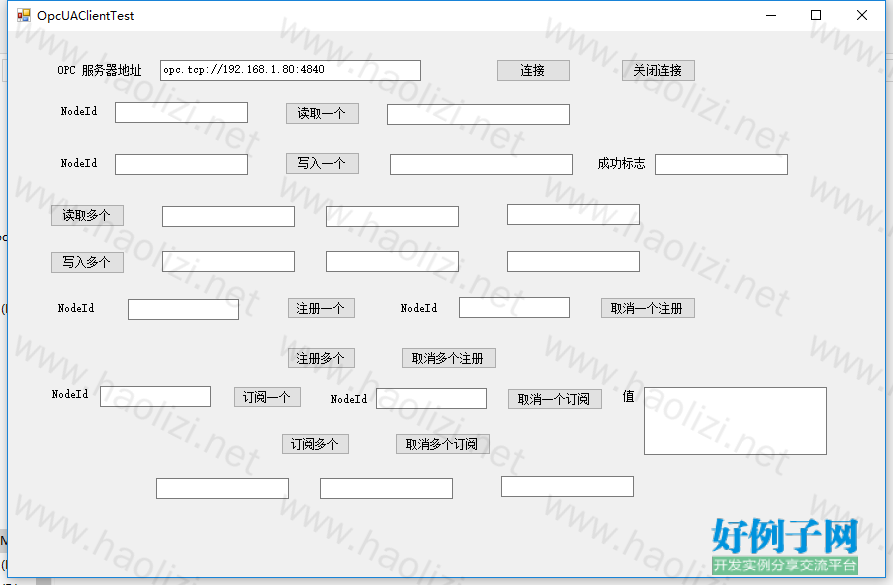
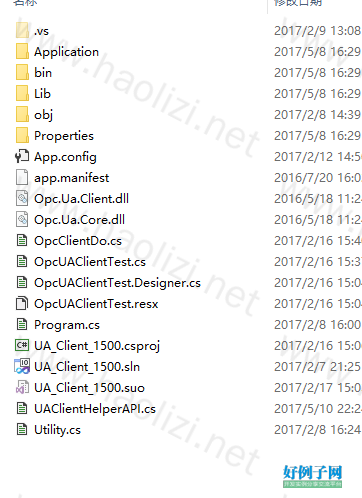
【核心代码】
//=============================================================================
// Siemens AG
// (c)Copyright (2016) All Rights Reserved
//-----------------------------------------------------------------------------
// Tested with: Windows 7 Ultimate x64
// Engineering: Visual Studio 2013
// Functionality: Wrapps up important classes/methods of the OPC UA .NET Stack to help
// with simple client implementation
//-----------------------------------------------------------------------------
// Change log table:
// Version Date Expert in charge Changes applied
// 01.00.00 31.08.2016 (Siemens) First released version
//=============================================================================
using System;
using System.Collections.Generic;
using System.IO;
using System.Net;
using System.Net.Sockets;
using System.Security.Cryptography.X509Certificates;
using System.Text;
using System.Threading.Tasks;
using Opc.Ua;
using Opc.Ua.Client;
namespace Siemens.UAClientHelper
{
public class UAClientHelperAPI
{
#region Construction
public UAClientHelperAPI()
{
// Creats the application configuration (containing the certificate) on construction
mApplicationConfig = CreateClientConfiguration();
}
#endregion
#region Properties
/// <summary>
/// Keeps a session with an UA server.
/// </summary>
private Session mSession = null;
/// <summary>
/// Specifies this application
/// </summary>
private ApplicationConfiguration mApplicationConfig = null;
/// <summary>
/// Provides the session being established with an OPC UA server.
/// </summary>
public Session Session
{
get { return mSession; }
}
/// <summary>
/// Provides the event for value changes of a monitored item.
/// </summary>
public MonitoredItemNotificationEventHandler ItemChangedNotification = null;
/// <summary>
/// Provides the event for KeepAliveNotifications.
/// </summary>
public KeepAliveEventHandler KeepAliveNotification = null;
#endregion
#region Discovery
/// <summary>Finds Servers based on a discovery url</summary>
/// <param name="discoveryUrl">The discovery url</param>
/// <returns>ApplicationDescriptionCollection containing found servers</returns>
/// <exception cref="Exception">Throws and forwards any exception with short error description.</exception>
public ApplicationDescriptionCollection FindServers(string discoveryUrl)
{
//Create a URI using the discovery URL
Uri uri = new Uri(discoveryUrl);
try
{
//Ceate a DiscoveryClient
DiscoveryClient client = DiscoveryClient.Create(uri);
//Find servers
ApplicationDescriptionCollection servers = client.FindServers(null);
return servers;
}
catch (Exception e)
{
//handle Exception here
throw e;
}
}
/// <summary>Finds Endpoints based on a server's url</summary>
/// <param name="discoveryUrl">The server's url</param>
/// <returns>EndpointDescriptionCollection containing found Endpoints</returns>
/// <exception cref="Exception">Throws and forwards any exception with short error description.</exception>
public EndpointDescriptionCollection GetEndpoints(string serverUrl)
{
//Create a URI using the server's URL
Uri uri = new Uri(serverUrl);
try
{
//Create a DiscoveryClient
DiscoveryClient client = DiscoveryClient.Create(uri);
//Search for available endpoints
EndpointDescriptionCollection endpoints = client.GetEndpoints(null);
return endpoints;
}
catch (Exception e)
{
//handle Exception here
throw e;
}
}
#endregion
#region Connect/Disconnect
/// <summary>Establishes the connection to an OPC UA server and creates a session using a server url.</summary>
/// <param name="url">The Url of the endpoint as string.</param>
/// <param name="localIpAddress">The ip address of the interface to connect with</param>
/// <param name="security">Use security or not</param>
/// <exception cref="Exception">Throws and forwards any exception with short error description.</exception>
public void Connect(string url, bool security)
{
try
{
//Secify application configuration
ApplicationConfiguration ApplicationConfig = mApplicationConfig;
//Hook up a validator function for a CertificateValidation event
mApplicationConfig.CertificateValidator.CertificateValidation = Validator_CertificateValidation;
//Create EndPoint description
EndpointDescription EndpointDescription = CreateEndpointDescription(url, security);
//Create EndPoint configuration
EndpointConfiguration EndpointConfiguration = EndpointConfiguration.Create(ApplicationConfig);
//Create an Endpoint object to connect to server
ConfiguredEndpoint Endpoint = new ConfiguredEndpoint(null, EndpointDescription, EndpointConfiguration);
//Create anonymous user identity
UserIdentity UserIdentity = new UserIdentity();
//Create and connect session
mSession = Session.Create(
ApplicationConfig,
Endpoint,
true,
"MySession",
60000,
UserIdentity,
null
);
mSession.KeepAlive = new KeepAliveEventHandler(Notification_KeepAlive);
}
catch (Exception e)
{
//handle Exception here
throw e;
}
}
/// <summary>Establishes the connection to an OPC UA server and creates a session using a EndpointDescription.</summary>
/// <param name="endpointDescription">The EndpointDescription of the server's endpoint</param>
/// <param name="localIpAddress">The ip address of the interface to connect with</param>
/// <exception cref="Exception">Throws and forwards any exception with short error description.</exception>
public void Connect(EndpointDescription endpointDescription)
{
try
{
//Secify application configuration
ApplicationConfiguration ApplicationConfig = mApplicationConfig;
//Hook up a validator function for a CertificateValidation event
ApplicationConfig.CertificateValidator.CertificateValidation = Validator_CertificateValidation;
//Create EndPoint configuration
EndpointConfiguration EndpointConfiguration = EndpointConfiguration.Create(ApplicationConfig);
//Connect to server and get endpoints
ConfiguredEndpoint mEndpoint = new ConfiguredEndpoint(null, endpointDescription, EndpointConfiguration);
//Create the binding factory.
BindingFactory bindingFactory = BindingFactory.Create(mApplicationConfig, ServiceMessageContext.GlobalContext);
//Create anonymous user identity
UserIdentity UserIdentity = new UserIdentity();
//Create and connect session
mSession = Session.Create(
ApplicationConfig,
mEndpoint,
true,
"MySession",
60000,
UserIdentity,
null
);
mSession.KeepAlive = new KeepAliveEventHandler(Notification_KeepAlive);
}
catch (Exception e)
{
//handle Exception here
throw e;
}
}
/// <summary>Closes an existing session and disconnects from the server.</summary>
/// <exception cref="Exception">Throws and forwards any exception with short error description.</exception>
public void Disconnect()
{
// Close the session.
try
{
mSession.Close(10000);
mSession.Dispose();
}
catch (Exception e)
{
//handle Exception here
throw e;
}
}
#endregion
#region Browse
/// <summary>Browses the root folder of an OPC UA server.</summary>
/// <returns>ReferenceDescriptionCollection of found nodes</returns>
/// <exception cref="Exception">Throws and forwards any exception with short error description.</exception>
public ReferenceDescriptionCollection BrowseRoot()
{
//Create a collection for the browse results
ReferenceDescriptionCollection referenceDescriptionCollection;
//Create a continuationPoint
byte[] continuationPoint;
try
{
//Browse the RootFolder for variables, objects and methods
mSession.Browse(null, null, ObjectIds.RootFolder, 0u, BrowseDirection.Forward, ReferenceTypeIds.HierarchicalReferences, true, (uint)NodeClass.Variable | (uint)NodeClass.Object | (uint)NodeClass.Method, out continuationPoint, out referenceDescriptionCollection);
return referenceDescriptionCollection;
}
catch (Exception e)
{
//handle Exception here
throw e;
}
}
/// <summary>Browses a node ID provided by a ReferenceDescription</summary>
/// <param name="refDesc">The ReferenceDescription</param>
/// <returns>ReferenceDescriptionCollection of found nodes</returns>
/// <exception cref="Exception">Throws and forwards any exception with short error description.</exception>
public ReferenceDescriptionCollection BrowseNode(ReferenceDescription refDesc)
{
//Create a collection for the browse results
ReferenceDescriptionCollection referenceDescriptionCollection;
//Create a continuationPoint
byte[] continuationPoint;
//Create a NodeId using the selected ReferenceDescription as browsing starting point
NodeId nodeId = ExpandedNodeId.ToNodeId(refDesc.NodeId, null);
try
{
//Browse from starting point for all object types
mSession.Browse(null, null, nodeId, 0u, BrowseDirection.Forward, ReferenceTypeIds.HierarchicalReferences, true, 0, out continuationPoint, out referenceDescriptionCollection);
return referenceDescriptionCollection;
}
catch (Exception e)
{
//handle Exception here
throw e;
}
}
#endregion
#region Subscription
/// <summary>Creats a Subscription object to a server</summary>
/// <param name="publishingInterval">The publishing interval</param>
/// <returns>Subscription</returns>
/// <exception cref="Exception">Throws and forwards any exception with short error description.</exception>
public Subscription Subscribe(int publishingInterval)
{
//Create a Subscription object
Subscription subscription = new Subscription(mSession.DefaultSubscription);
//Enable publishing
subscription.PublishingEnabled = true;
//Set the publishing interval
subscription.PublishingInterval = publishingInterval;
//Add the subscription to the session
mSession.AddSubscription(subscription);
try
{
//Create/Activate the subscription
subscription.Create();
return subscription;
}
catch (Exception e)
{
//handle Exception here
throw e;
}
}
/// <summary>Ads a monitored item to an existing subscription</summary>
/// <param name="subscription">The subscription</param>
/// <param name="nodeIdString">The node Id as string</param>
/// <exception cref="Exception">Throws and forwards any exception with short error description.</exception>
public MonitoredItem AddMonitoredItem(Subscription subscription, string nodeIdString, int samplingInterval)
{
//Create a monitored item
MonitoredItem monitoredItem = new MonitoredItem(subscription.DefaultItem);
//Set the NodeId of the item
monitoredItem.StartNodeId = nodeIdString;
//Set the attribute Id (value here)
monitoredItem.AttributeId = Attributes.Value;
//Set reporting mode
monitoredItem.MonitoringMode = MonitoringMode.Reporting;
//Set the sampling interval (1 = fastest possible)
monitoredItem.SamplingInterval = samplingInterval;
//Set the queue size
monitoredItem.QueueSize = 0;
//Discard the oldest item after new one has been received
monitoredItem.DiscardOldest = true;
//Define event handler for this item and then add to monitoredItem
monitoredItem.Notification = new MonitoredItemNotificationEventHandler(Notification_MonitoredItem);
try
{
//Add the item to the subscription
subscription.AddItem(monitoredItem);
//Apply changes to the subscription
subscription.ApplyChanges();
return monitoredItem;
}
catch (Exception e)
{
//handle Exception here
throw e;
}
}
/// <summary>Removs a monitored item from an existing subscription</summary>
/// <param name="subscription">The subscription</param>
/// <param name="monitoredItem">The item</param>
/// <exception cref="Exception">Throws and forwards any exception with short error description.</exception>
public MonitoredItem RemoveMonitoredItem(Subscription subscription, MonitoredItem monitoredItem)
{
try
{
//Add the item to the subscription
subscription.RemoveItem(monitoredItem);
//Apply changes to the subscription
subscription.ApplyChanges();
return null;
}
catch (Exception e)
{
//handle Exception here
throw e;
}
}
/// <summary>Removes an existing Subscription</summary>
/// <param name="subscription">The subscription</param>
/// <exception cref="Exception">Throws and forwards any exception with short error description.</exception>
public void RemoveSubscription(Subscription subscription)
{
try
{
//Delete the subscription and all items submitted
subscription.Delete(true);
}
catch (Exception e)
{
//handle Exception here
throw e;
}
}
#endregion
#region Read/Write
/// <summary>Reads a node by node Id</summary>
/// <param name="nodeIdString">The node Id as string</param>
/// <returns>The read node</returns>
/// <exception cref="Exception">Throws and forwards any exception with short error description.</exception>
public Node ReadNode(string nodeIdString)
{
//Create a nodeId using the identifier string
NodeId nodeId = new NodeId(nodeIdString);
//Create a node
Node node = new Node();
try
{
//Read the dataValue
node = mSession.ReadNode(nodeId);
return node;
}
catch (Exception e)
{
//handle Exception here
throw e;
}
}
/// <summary>Writes values to node Ids</summary>
/// <param name="value">The values as strings</param>
/// <param name="nodeIdString">The nodes Id as strings</param>
/// <exception cref="Exception">Throws and forwards any exception with short error description.</exception>
public string WriteValues(List<String> values, List<String> nodeIdStrings)
{
//Create a collection of values to write
WriteValueCollection valuesToWrite = new WriteValueCollection();
//Create a collection for StatusCodes
StatusCodeCollection result = new StatusCodeCollection();
//Create a collection for DiagnosticInfos
DiagnosticInfoCollection diagnostics = new DiagnosticInfoCollection();
string returnVal = "";
foreach (String str in nodeIdStrings)
{
//Create a nodeId
NodeId nodeId = new NodeId(str);
//Create a dataValue
DataValue dataValue = new DataValue();
//Read the dataValue
try
{
dataValue = mSession.ReadValue(nodeId);
}
catch (Exception e)
{
//handle Exception here
throw e;
}
//Get the data type of the read dataValue
string dataType = dataValue.Value.GetType().FullName;
dynamic setDataValues;
if (dataType == "System.Byte[]")
{
string[] tempValues = values[nodeIdStrings.IndexOf(str)].ToString().Split(';');
Byte[] tempStr = new Byte[tempValues.Length];
for (int j = 0; j < tempValues.Length; j )
{
Byte i = Convert.ToByte(tempValues[j]);
tempStr[j] = i;
}
setDataValues = tempStr;
}
else if (dataType == "System.Boolean[]")
{
string[] tempValues = values[nodeIdStrings.IndexOf(str)].ToString().Split(';');
Boolean[] tempStr = new Boolean[tempValues.Length];
for (int j = 0; j < tempValues.Length; j )
{
Boolean i = Convert.ToBoolean(tempValues[j]);
tempStr[j] = i;
}
setDataValues = tempStr;
}
else if (dataType == "System.Int16[]")
{
string[] tempValues = values[nodeIdStrings.IndexOf(str)].ToString().Split(';');
Int16[] tempStr = new Int16[tempValues.Length];
for (int j = 0; j < tempValues.Length; j )
{
Int16 i = Convert.ToInt16(tempValues[j]);
tempStr[j] = i;
}
setDataValues = tempStr;
}
else if (dataType == "System.UInt16[]")
{
string[] tempValues = values[nodeIdStrings.IndexOf(str)].ToString().Split(';');
UInt16[] tempStr = new UInt16[tempValues.Length];
for (int j = 0; j < tempValues.Length; j )
{
UInt16 i = Convert.ToUInt16(tempValues[j]);
tempStr[j] = i;
}
setDataValues = tempStr;
}
else if (dataType == "System.UInt32[]")
{
string[] tempValues = values[nodeIdStrings.IndexOf(str)].ToString().Split(';');
UInt32[] tempStr = new UInt32[tempValues.Length];
for (int j = 0; j < tempValues.Length; j )
{
UInt32 i = Convert.ToUInt32(tempValues[j]);
tempStr[j] = i;
}
setDataValues = tempStr;
}
else if (dataType == "System.Int64[]")
{
string[] tempValues = values[nodeIdStrings.IndexOf(str)].ToString().Split(';');
Int64[] tempStr = new Int64[tempValues.Length];
for (int j = 0; j < tempValues.Length; j )
{
Int64 i = Convert.ToInt64(tempValues[j]);
tempStr[j] = i;
}
setDataValues = tempStr;
}
else if (dataType == "System.Single[]")
{
string[] tempValues = values[nodeIdStrings.IndexOf(str)].ToString().Split(';');
Single[] tempStr = new Single[tempValues.Length];
for (int j = 0; j < tempValues.Length; j )
{
Single i = Convert.ToSingle(tempValues[j]);
tempStr[j] = i;
}
setDataValues = tempStr;
}
else
{
setDataValues = values[nodeIdStrings.IndexOf(str)].ToString();
}
Variant variant = new Variant(Convert.ChangeType(setDataValues, dataValue.Value.GetType()));
// Variant variant = new Variant(Convert.ChangeType(values[nodeIdStrings.IndexOf(str)], dataValue.Value.GetType()));
//Overwrite the dataValue with a new constructor using read dataType
dataValue = new DataValue(variant);
//Create a WriteValue using the NodeId, dataValue and attributeType
WriteValue valueToWrite = new WriteValue();
valueToWrite.Value = dataValue;
valueToWrite.NodeId = nodeId;
valueToWrite.AttributeId = Attributes.Value;
//Add the dataValues to the collection
valuesToWrite.Add(valueToWrite);
}
try
{
//Write the collection to the server
mSession.Write(null, valuesToWrite, out result, out diagnostics);
returnVal = result[0].ToString();
return returnVal;
}
catch (Exception e)
{
//handle Exception here
throw e;
}
}
/// <summary>Reads values from node Ids</summary>
/// <param name="nodeIdStrings">The node Ids as string</param>
/// <returns>The read values as strings</returns>
/// <exception cref="Exception">Throws and forwards any exception with short error description.</exception>
public List<string> ReadValues(List<String> nodeIdStrings)
{
List<NodeId> nodeIds = new List<NodeId>();
List<Type> types = new List<Type>();
List<object> values = new List<object>();
List<ServiceResult> serviceResults = new List<ServiceResult>();
foreach (string str in nodeIdStrings)
{
//Create a nodeId using the identifier string and add to list
nodeIds.Add(new NodeId(str));
//No need for types
types.Add(null);
}
try
{
//Read the dataValues
mSession.ReadValues(nodeIds, types, out values, out serviceResults);
//check ServiceResults to
foreach (ServiceResult svResult in serviceResults)
{
if (svResult.ToString() != "Good")
{
Exception e = new Exception(svResult.ToString());
throw e;
}
}
List<string> resultStrings = new List<string>();
foreach (object result in values)
{
if (result.ToString() == "System.Byte[]")
{
string str = "";
str = BitConverter.ToString((byte[])result).Replace("-", ";");
resultStrings.Add(str);
}
else if (result.ToString() == "System.Boolean[]")
{
string str = "";
foreach (Boolean intVar in (Boolean[])result)
{
str = str ";" intVar.ToString();
}
str = str.Remove(0, 1);
resultStrings.Add(str);
}
else if (result.ToString() == "System.Int16[]")
{
string str = "";
foreach (Int16 intVar in (Int16[])result)
{
str = str ";" intVar.ToString();
}
str = str.Remove(0, 1);
resultStrings.Add(str);
}
else if (result.ToString() == "System.UInt16[]")
{
string str = "";
foreach (UInt16 intVar in (UInt16[])result)
{
str = str ";" intVar.ToString();
}
str = str.Remove(0, 1);
resultStrings.Add(str);
}
else if (result.ToString() == "System.Int64[]")
{
string str = "";
foreach (Int64 intVar in (Int64[])result)
{
str = str ";" intVar.ToString();
}
str = str.Remove(0, 1);
resultStrings.Add(str);
}
else if (result.ToString() == "System.Single[]")
{
string str = "";
foreach (float intVar in (float[])result)
{
str = str ";" intVar.ToString();
}
str = str.Remove(0, 1);
resultStrings.Add(str);
}
else
{
resultStrings.Add(result.ToString());
}
}
return resultStrings;
}
catch (Exception e)
{
//handle Exception here
throw e;
}
}
/// <summary>Registers Node Ids to the server</summary>
/// <param name="nodeIdStrings">The node Ids as strings</param>
/// <returns>The registered Node Ids as strings</returns>
/// <exception cref="Exception">Throws and forwards any exception with short error description.</exception>
public List<string> RegisterNodeIds(List<String> nodeIdStrings)
{
NodeIdCollection nodesToRegister = new NodeIdCollection();
NodeIdCollection registeredNodes = new NodeIdCollection();
List<string> registeredNodeIdStrings = new List<string>();
foreach (string str in nodeIdStrings)
{
//Create a nodeId using the identifier string and add to list
nodesToRegister.Add(new NodeId(str));
}
try
{
//Register nodes
mSession.RegisterNodes(null, nodesToRegister, out registeredNodes);
foreach (NodeId nodeId in registeredNodes)
{
registeredNodeIdStrings.Add(nodeId.ToString());
}
return registeredNodeIdStrings;
}
catch (Exception e)
{
//handle Exception here
throw e;
}
}
/// <summary>Unregister Node Ids to the server</summary>
/// <param name="nodeIdStrings">The node Ids as string</param>
/// <exception cref="Exception">Throws and forwards any exception with short error description.</exception>
public void UnregisterNodeIds(List<String> nodeIdStrings)
{
NodeIdCollection nodesToUnregister = new NodeIdCollection();
List<string> registeredNodeIdStrings = new List<string>();
foreach (string str in nodeIdStrings)
{
//Create a nodeId using the identifier string and add to list
nodesToUnregister.Add(new NodeId(str));
}
try
{
//Register nodes
mSession.UnregisterNodes(null, nodesToUnregister);
}
catch (Exception e)
{
//handle Exception here
throw e;
}
}
#endregion
#region EventHandling
/// <summary>Eventhandler to accept the server certificate forwards this event</summary>
private void Validator_CertificateValidation(CertificateValidator certificate, CertificateValidationEventArgs e)
{
//Accept the certificate send from the server
e.Accept = true;
}
/// <summary>Eventhandler for MonitoredItemNotifications forwards this event</summary>
private void Notification_MonitoredItem(MonitoredItem monitoredItem, MonitoredItemNotificationEventArgs e)
{
ItemChangedNotification(monitoredItem, e);
}
/// <summary>Eventhandler for KeepAlive forwards this event</summary>
private void Notification_KeepAlive(Session session, KeepAliveEventArgs e)
{
KeepAliveNotification(session, e);
}
#endregion
#region Private methods
/// <summary>Creats a minimal required ApplicationConfiguration</summary>
/// <param name="localIpAddress">The ip address of the interface to connect with</param>
/// <returns>The ApplicationConfiguration</returns>
/// <exception cref="Exception">Throws and forwards any exception with short error description.</exception>
private static ApplicationConfiguration CreateClientConfiguration()
{
// The application configuration can be loaded from any file.
// ApplicationConfiguration.Load() method loads configuration by looking up a file path in the App.config.
// This approach allows applications to share configuration files and to update them.
// This example creates a minimum ApplicationConfiguration using its default constructor.
ApplicationConfiguration configuration = new ApplicationConfiguration();
// Step 1 - Specify the client identity.
configuration.ApplicationName = "UA Client 1500";
configuration.ApplicationType = ApplicationType.Client;
configuration.ApplicationUri = "http://localhost/VendorId/ApplicationId/InstanceId";
configuration.ProductUri = "http://VendorId/ProductId/VersionId";
// Step 2 - Specify the client's application instance certificate.
// Application instance certificates must be placed in a windows certficate store because that is
// the best way to protect the private key. Certificates in a store are identified with 4 parameters:
// StoreLocation, StoreName, SubjectName and Thumbprint.
// When using StoreType = Directory you need to have the opc.ua.certificategenerator.exe installed on your machine
configuration.SecurityConfiguration = new SecurityConfiguration();
configuration.SecurityConfiguration.ApplicationCertificate = new CertificateIdentifier();
configuration.SecurityConfiguration.ApplicationCertificate.StoreType = CertificateStoreType.Windows;
configuration.SecurityConfiguration.ApplicationCertificate.StorePath = "LocalMachine\\My";
configuration.SecurityConfiguration.ApplicationCertificate.SubjectName = configuration.ApplicationName;
// find the client certificate in the store.
X509Certificate2 clientCertificate = configuration.SecurityConfiguration.ApplicationCertificate.Find(true);
// Get local interface ip addresses and DNS name
List<string> localIps = GetLocalIPAddressAndDns();
// create a new certificate if one not found.
if (clientCertificate == null)
{
// this code would normally be called as part of the installer - called here to illustrate.
// create a new certificate an place it in the current directory.
clientCertificate = CertificateFactory.CreateCertificate(
configuration.SecurityConfiguration.ApplicationCertificate.StoreType,
configuration.SecurityConfiguration.ApplicationCertificate.StorePath,
configuration.ApplicationUri,
configuration.ApplicationName,
null,
localIps,
1024,
120);
}
// Step 3 - Specify the supported transport quotas.
// The transport quotas are used to set limits on the contents of messages and are
// used to protect against DOS attacks and rogue clients. They should be set to
// reasonable values.
configuration.TransportQuotas = new TransportQuotas();
configuration.TransportQuotas.OperationTimeout = 360000;
configuration.TransportQuotas.MaxStringLength = 67108864;
// Step 4 - Specify the client specific configuration.
configuration.ClientConfiguration = new ClientConfiguration();
configuration.ClientConfiguration.DefaultSessionTimeout = 999999999;
// Step 5 - Validate the configuration.
// This step checks if the configuration is consistent and assigns a few internal variables
// that are used by the SDK. This is called automatically if the configuration is loaded from
// a file using the ApplicationConfiguration.Load() method.
configuration.Validate(ApplicationType.Client);
return configuration;
}
/// <summary>Creats an EndpointDescription</summary>
/// <param name="url">The endpoint url</param>
/// <param name="security">Use security or not</param>
/// <returns>The EndpointDescription</returns>
/// <exception cref="Exception">Throws and forwards any exception with short error description.</exception>
private static EndpointDescription CreateEndpointDescription(string url, bool security)
{
// create the endpoint description.
EndpointDescription endpointDescription = new EndpointDescription();
// submit the url of the endopoint
endpointDescription.EndpointUrl = url;
// specify the security policy to use.
if (security)
{
endpointDescription.SecurityPolicyUri = SecurityPolicies.Basic128Rsa15;
endpointDescription.SecurityMode = MessageSecurityMode.SignAndEncrypt;
}
else
{
endpointDescription.SecurityPolicyUri = SecurityPolicies.None;
endpointDescription.SecurityMode = MessageSecurityMode.None;
}
// specify the transport profile.
endpointDescription.TransportProfileUri = Profiles.UaTcpTransport;
return endpointDescription;
}
/// <summary>Gets the local IP addresses and the DNS name</summary>
/// <returns>The list of IPs and names</returns>
/// <exception cref="Exception">Throws and forwards any exception with short error description.</exception>
public static List<string> GetLocalIPAddressAndDns()
{
List<string> localIps = new List<string>();
var host = Dns.GetHostEntry(Dns.GetHostName());
foreach (var ip in host.AddressList)
{
if (ip.AddressFamily == AddressFamily.InterNetwork)
{
localIps.Add(ip.ToString());
}
}
if (localIps.Count == 0)
{
throw new Exception("Local IP Address Not Found!");
}
localIps.Add(Dns.GetHostName());
return localIps;
}
#endregion
}
}
好例子网口号:伸出你的我的手 — 分享!
网友评论
小贴士
感谢您为本站写下的评论,您的评论对其它用户来说具有重要的参考价值,所以请认真填写。
- 类似“顶”、“沙发”之类没有营养的文字,对勤劳贡献的楼主来说是令人沮丧的反馈信息。
- 相信您也不想看到一排文字/表情墙,所以请不要反馈意义不大的重复字符,也请尽量不要纯表情的回复。
- 提问之前请再仔细看一遍楼主的说明,或许是您遗漏了。
- 请勿到处挖坑绊人、招贴广告。既占空间让人厌烦,又没人会搭理,于人于己都无利。
关于好例子网
本站旨在为广大IT学习爱好者提供一个非营利性互相学习交流分享平台。本站所有资源都可以被免费获取学习研究。本站资源来自网友分享,对搜索内容的合法性不具有预见性、识别性、控制性,仅供学习研究,请务必在下载后24小时内给予删除,不得用于其他任何用途,否则后果自负。基于互联网的特殊性,平台无法对用户传输的作品、信息、内容的权属或合法性、安全性、合规性、真实性、科学性、完整权、有效性等进行实质审查;无论平台是否已进行审查,用户均应自行承担因其传输的作品、信息、内容而可能或已经产生的侵权或权属纠纷等法律责任。本站所有资源不代表本站的观点或立场,基于网友分享,根据中国法律《信息网络传播权保护条例》第二十二与二十三条之规定,若资源存在侵权或相关问题请联系本站客服人员,点此联系我们。关于更多版权及免责申明参见 版权及免责申明
支持(0) 盖楼(回复)
支持(0) 盖楼(回复)
支持(0) 盖楼(回复)